
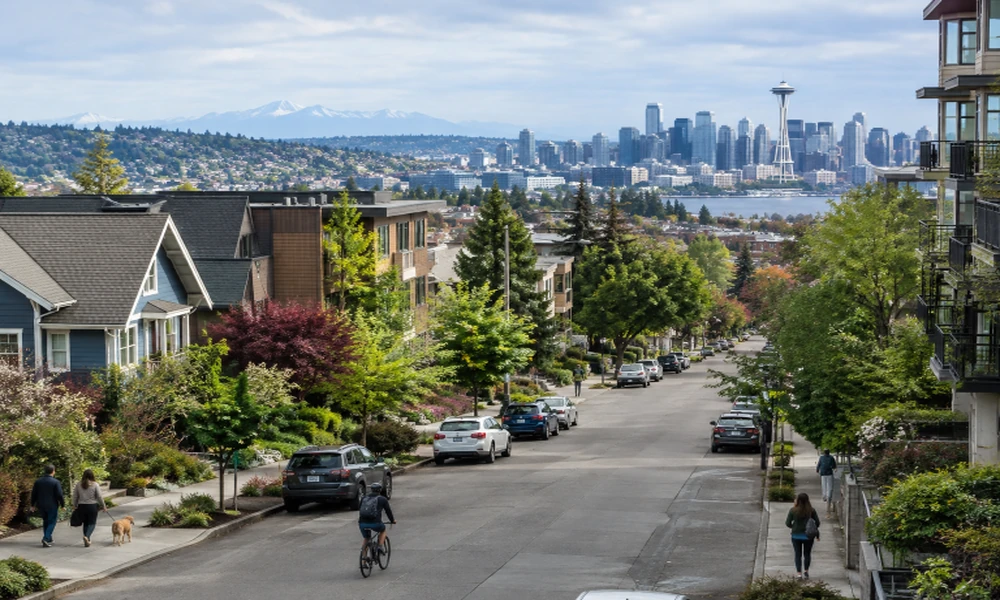
What to Consider When Comparing Seattle Neighborhoods as a HomebuyerKey Takeaways
- A neighborhood should support daily routines, not simply look attractive online.
- Commutes, parking, transit access, and walkability can meaningfully affect a home’s real cost.
- Compare total monthly ownership expenses, not just asking prices.
- Seattle homes can differ greatly in age, slope, layout, lot size, and maintenance needs.
- Several visits and carefully matched recent sales can improve a buying decision.
Table of Contents
- Start With Daily Life
- Compare Commute Options at Realistic Times
- Look Beyond a Walkability Score
- Compare Complete Home Costs
- Study Property Types and Conditions
- Check Schools, Services, and Amenities
- Review Future Neighborhood Changes
- Use Recent Sales and Build a Scorecard
- Questions to Ask Before Making an Offer
- Final Checklist
Finding the right home in Seattle, Washington means choosing a neighborhood that works on ordinary weekdays, not only during an open house. Buyers comparing areas can benefit from local perspective, current listings, and neighborhood-level context from Seattle, WA real estate experts Lake & Company Real Estate. Lake & Company Real Estate has served Seattle since 1982, operates from Green Lake, and provides property searches, neighborhood information, local broker support, and home valuation services for buyers and sellers across Seattle and nearby Puget Sound communities.
A smaller home near daily destinations may be a better fit than a larger property that adds time, parking costs, and stress to every routine. The strongest choice is usually the one that balances budget, travel, home condition, services, and future flexibility.
Start With Daily Life
Before touring neighborhoods, write down what a normal weekday actually requires. Include work or school locations, grocery trips, childcare, medical appointments, exercise, dog walks, and time spent outdoors. Then identify the home features that make those routines easier, such as a garage, driveway, home office, storage space, yard, or a practical place to keep bikes and rain gear.
Seattle is not one uniform housing market. A compact condominium near restaurants and frequent transit offers a different lifestyle than a detached house on a quieter street with more outdoor space. Neither is automatically better. The relevant question is which trade-offs fit the household’s priorities.
Compare Commute Options at Realistic Times
Test the actual trip before making an offer. Drive, ride transit, bike, or walk the route at the hours you expect to use it. Morning travel, school pickup periods, evening returns, and weekend errands can feel very different. Consider hills, bridge crossings, transfer points, weather exposure, parking availability, and the cost of paid parking.
Hybrid work can reduce the number of weekly trips, but it does not eliminate the value of reliable transportation. A buyer who works from home may place more weight on a quiet office, nearby coffee shops, or a convenient midday errand route, while a frequent commuter may reasonably prioritize direct access over extra square footage.
Look Beyond a Walkability Score
A score can be a useful starting point, but it cannot tell you whether the route to the grocery store has comfortable sidewalks, safe crossings, steep grades, lighting, or traffic noise. Walk the routes you expect to use, including the route from the home to transit, parks, pharmacies, and everyday shopping.
Visit at more than one time of day. Notice delivery traffic, restaurant activity, construction noise, street parking pressure, and how the area feels after dark. A neighborhood can be lively and convenient while still being too busy for a buyer who values quiet, or it can be peaceful but less practical for car-free errands.
Compare Complete Home Costs
The list price is only the starting point. Build a monthly estimate for each property that includes principal and interest, property taxes, insurance, utilities, homeowners association dues when applicable, parking, transportation, and expected maintenance. A lower-priced home may not be the lower-cost option if it requires substantial driving, major repairs, or significant monthly dues.
Older homes and sloped sites deserve particular attention. Ask about roof age, electrical updates, drainage, sewer lines, foundations, retaining walls, and permits for previous work. Inspections can identify concerns, but buyers should also budget for routine upkeep and eventual replacement of major systems.
Study Property Types and Conditions
Neighborhood choice often determines what type of home fits the budget. Detached homes may provide more privacy, storage, and outdoor space. Townhomes can offer a middle ground between ownership space and maintenance demands. Condominiums may place buyers closer to services and transit, but can include association rules and dues.
Compare usable space rather than relying only on total square footage. Look at bedroom placement, storage, laundry, natural light, parking, basement condition, work-from-home potential, and whether the layout can adapt if household needs change. A well-designed smaller home may function better than a larger home with limited storage or awkward rooms.
Check Schools, Services, and Amenities
Families should independently verify school assignment, transportation, enrollment rules, and available programs for a specific address. Seattle Public Schools provides an address lookup process and attendance area maps that can help buyers begin that verification. Do not rely on a listing description alone for school information.
Also compare access to healthcare, childcare, libraries, community centers, parks, grocery stores, and recreation. Think ahead five to ten years. A neighborhood that works well for one stage of life may feel less convenient if work arrangements, caregiving needs, household size, or transportation preferences change.
Review Future Neighborhood Changes
Look beyond the property line. Nearby development can bring new homes, businesses, sidewalks, and transportation improvements, but it can also mean construction activity, changing views, and more traffic during certain periods. Before committing, review zoning, permits, and active projects near the home.
The City of Seattle offers tools for researching projects, permits, and property information by address or map. This research is especially useful when a home borders an empty lot, sits near a commercial corridor, or depends on a view, parking pattern, or quiet street environment that could change.
Use Recent Sales and Build a Scorecard
Current asking prices show seller expectations, while closed sales provide stronger evidence of what comparable homes have recently sold for. Compare homes with similar location, property type, condition, square footage, parking, lot characteristics, updates, and views. Citywide averages can hide important differences between nearby areas.
A Simple Neighborhood Scorecard
After each visit, rate each category from one to five and add short notes:
Questions to Ask Before Making an Offer
- How long will the real commute take at normal travel times?
- What can the household reach without a car?
- What are the complete monthly costs beyond the mortgage payment?
- Which repairs, permits, or drainage issues need closer review?
- What nearby projects could affect the property?
- Will this neighborhood still work in five years?
Final Checklist
Visit preferred neighborhoods more than once, test key travel routes, walk to essential services, compare similarly situated recent sales, verify school and service details, and research planned development. The best Seattle neighborhood is not necessarily the trendiest or the closest to one destination. It is the place that makes everyday life feel manageable, comfortable, and sustainable over time.