
Key Takeaways
- Routine inspections and preventive maintenance are fundamental for early detection and resolution of plumbing issues.
- Staff education is critical for preventing misuse and maintaining system health.
- Upgrading to water-efficient fixtures and treating hard water improves performance and extends system life.
- Developing and practicing an emergency plan limits the impact of unexpected plumbing failures.
Table of Contents
- Regular Inspections and Maintenance
- Educating Staff on Proper Use
- Implementing Water-Saving Fixtures
- Addressing Hard Water Issues
- Developing an Emergency Response Plan
Effective plumbing is the backbone of any smoothly operating commercial property. Without regular care and attention, plumbing issues can spiral into costly repairs, disrupt business operations, and pose health risks for occupants. To maintain optimal building performance, property owners and facility managers must proactively manage their plumbing systems. Understanding best practices in commercial plumbing helps prevent unexpected disasters and ensure business continuity.
A commitment to both ongoing maintenance and staff education is essential for a robust plumbing infrastructure. With proven strategies such as installing efficient fixtures, addressing water quality concerns, and creating a clear emergency response plan, building owners can safeguard their investments and minimize risk.
Comprehensive plumbing care goes beyond inspections: investing in building-wide training and technology upgrades yields long-term savings. Building relationships with a trusted plumber can also provide peace of mind, especially in high-traffic commercial settings.
Regular Inspections and Maintenance
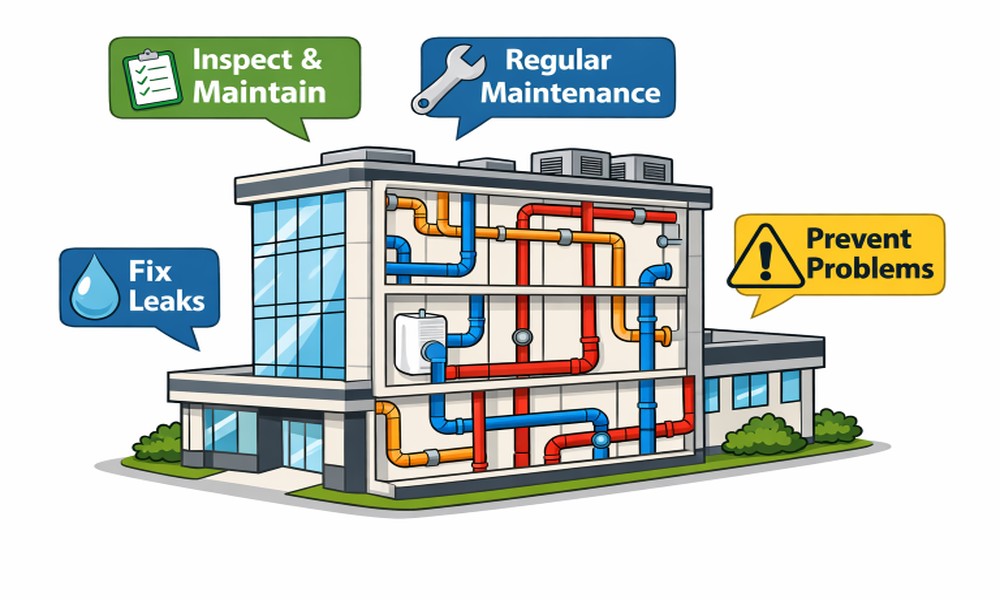
Scheduled plumbing inspections are vital in commercial buildings due to the complexity and scale of their systems. Routine checks help uncover issues such as leaks, corrosion, and worn-out components before they escalate. Maintenance tasks, including drain cleaning, pipe insulation, and valve testing, should be carried out at regular intervals, tailored to the building’s usage pattern.
According to Forbes Advisor, preventative maintenance is one of the best ways for any property owner to avoid major plumbing emergencies. Detecting and addressing problems early can save businesses thousands in repairs and lost hours.
In addition to scheduled inspections, many property managers are embracing technology-driven solutions, such as remote sensors and digital monitoring, that provide real-time insights into system conditions. These technologies can help alert building operators to even minor leaks or irregular flow rates before they result in widespread issues, offering an extra layer of protection for commercial assets and tenant safety.
Developing detailed maintenance logs provides invaluable data over time, helping managers spot recurring problem areas and make informed decisions about future upgrades or targeted interventions.
Educating Staff on Proper Use
Building-wide awareness is a powerful defense against plumbing mishaps. Training staff to avoid flushing unsuitable items, reporting leaks promptly, and handling fixtures carefully can prevent many common problems. Posting informative signage in restrooms and kitchens reinforces these lessons and encourages everyone to take responsibility.
Research from Forbes Advisor underscores that well-informed occupants are instrumental in maintaining problem-free commercial plumbing systems. Their day-to-day vigilance can make a substantial difference in reducing service calls and preventing blockages.
Periodically scheduling refresher workshops or providing digital resources about proper fixture use further reinforces positive habits among staff and tenants. Staff should be informed about whom to contact when plumbing problems are discovered, ensuring prompt responses and minimizing potential damage or safety risks. Integrating plumbing awareness into onboarding processes for new hires ensures the long-term sustainability of these best practices.
Implementing Water-Saving Fixtures
Modern commercial plumbing systems increasingly incorporate water-saving technology. Fixtures such as low-flow toilets, sensor-activated faucets, and efficient urinals greatly reduce water usage. Not only does this support sustainability, but it also eases stress on plumbing lines, which can reduce leaks and maintenance requirements.
Implementing these upgrades reduces utility costs over time while also benefiting the environment. Local building codes often encourage or require these changes, so keeping up to date with regional regulations is important for compliance and savings.
Retrofitting older buildings with water-efficient technologies may involve initial investment costs, but federal, state, and local incentives can sometimes help offset these expenses. Over time, lower water bills and reduced need for ongoing maintenance or repairs often justify the investment, leading to higher net returns and increased property value. Facility managers should conduct periodic reviews to identify opportunities for further improvement, such as smart irrigation or greywater systems, to maximize water conservation efforts.
Addressing Hard Water Issues
Hard water, which contains high levels of minerals such as calcium and magnesium, is a common challenge in many commercial buildings. Over time, mineral deposits can clog pipes, reduce appliance efficiency, and shorten the life of plumbing systems. Installing water softeners or conditioners helps counteract these effects and maintains water flow and fixture longevity.
Periodic water quality testing is recommended for large properties to determine the appropriate water treatment strategy. Additionally, regularly descaling fixtures and appliances helps avoid buildup-related failures, keeping operations running smoothly.
Ignoring hard water concerns can also lead to gradual, but costly, corrosion in heaters, boilers, and other water-fed machinery. Preventative care may include using descaling agents and scheduling professional flushing of systems. Documenting the frequency and effectiveness of these actions provides a reference point for facilities maintenance teams and helps identify opportunities for future risk reduction.
Developing an Emergency Response Plan
No matter how diligent maintenance practices are, unexpected plumbing emergencies can still occur. An effective emergency response plan includes clear steps for shutting off the water at the main supply, detailed contact lists for key personnel and service providers, and procedures for promptly notifying tenants and staff. Regular drills and updates to the emergency plan ensure everyone knows their role, especially during critical situations.
Storing emergency kits equipped with essential tools and supplies in accessible locations further enhances preparedness. Up-to-date documentation, including plumbing schematics and system manuals, enables quicker diagnosis and remediation during an incident.
It’s important to coordinate emergency planning with all stakeholders in the building, including tenants, maintenance teams, property owners, and vendors. Practicing response protocols during periodic safety drills establishes trust and experience among teams, helping build confidence when faced with a real plumbing crisis. Engaging plumbers familiar with your building’s layout also speeds resolution and limits damage, contributing to a safer, more reliable facility management plan.
Proactively managing commercial plumbing helps mitigate disruption, protect assets, and maintain a productive workplace. By implementing regular inspections, educating stakeholders, upgrading fixtures, addressing water quality, and preparing for crises, property managers can avert most plumbing disasters and sustain uninterrupted business operations.