
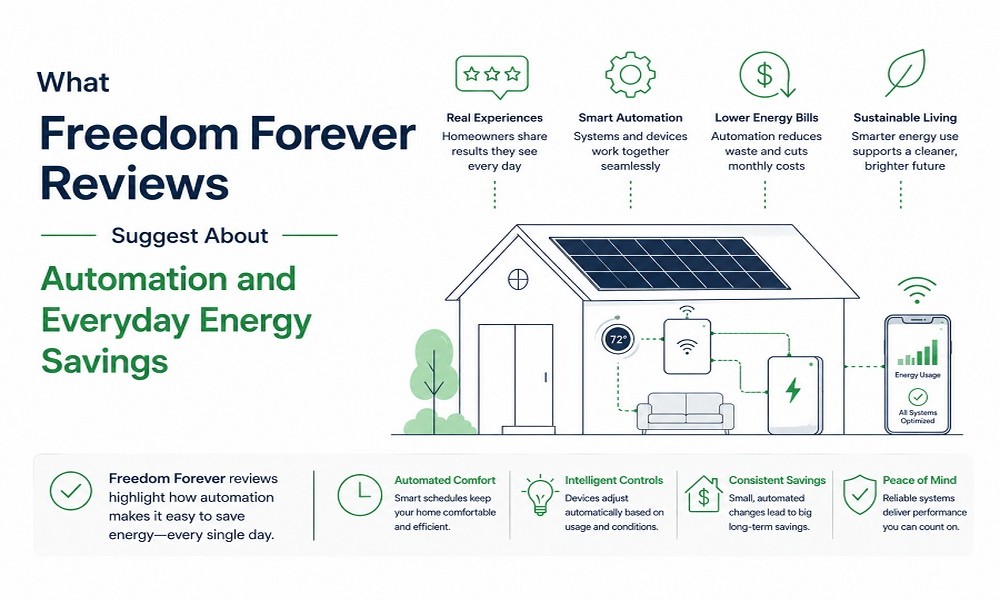
Energy savings in modern homes increasingly occur without deliberate action from homeowners. As smart energy systems become more common, efficiency gains are delivered through background processes rather than constant adjustment. Freedom Forever Reviews reflect a market where solar systems are often paired with monitoring tools and digital dashboards that provide greater visibility into production and usage.
This change reflects developing expectations around convenience and control. Homeowners value systems that improve performance without demanding attention. Automation supports this preference by handling decisions internally, reducing unnecessary use while preserving consistent living conditions and familiar routines.
Automation Moves Energy Decisions into the Background
Traditional energy savings often depended on conscious effort. Homeowners adjusted thermostats, timed appliance use, or monitored consumption manually. These actions required attention and consistency, and results varied based on daily habits.
Automation changes this dynamic by embedding decisions within the system itself. Adjustments occur automatically based on conditions rather than reminders. Savings accumulate steadily as systems manage behavior continuously instead of intermittently, allowing efficiency to persist without active participation.
Background Systems Respond to Real Conditions
Automated energy systems rely on real-time data to guide decisions. Sensors track occupancy, temperature, and usage patterns, allowing systems to respond to actual conditions rather than fixed schedules.
This responsiveness limits unnecessary use. Heating, cooling, and lighting adjust when spaces are unoccupied or conditions shift. Automation keeps energy flows in line with real need, supporting efficiency without noticeable intervention or disruption. By responding dynamically, systems avoid waste while maintaining comfort. Small, continuous adjustments replace abrupt changes or manual corrections. Over time, this quiet optimization contributes to meaningful energy savings and consistent performance.
Climate Control Benefits from Subtle Adjustment
Climate systems represent one of the most significant opportunities for automated savings. Smart thermostats adjust operation gradually throughout the day, balancing comfort with efficiency.
Rather than abrupt changes, systems fine-tune performance. Homes remain comfortable while avoiding excess runtime. Automation manages these adjustments quietly, reducing waste without affecting the daily experience of occupants.
Appliances Operate with Minimal Oversight
Major household appliances also benefit from automation. Smart systems coordinate operation based on availability, efficiency, and overall system conditions. This coordination allows appliances to run at optimal times without affecting daily routines. Energy-intensive tasks can be scheduled or adjusted automatically to support balanced demand. As a result, appliance performance aligns with broader system goals while remaining largely invisible to occupants.
This coordination occurs without manual scheduling. Appliances complete tasks while avoiding unnecessary overlap or peak demand periods. Automation reduces waste by aligning operations with the system context rather than relying on fixed habits.
Automation Reduces Behavioral Burden
One of automation’s most valuable contributions is reducing behavioral burden. Homeowners no longer need to remember energy-saving practices or monitor settings. Systems manage optimization automatically.
This reduction supports consistency. Savings occur regardless of routine changes, travel, or shifting priorities. Automation makes efficiency dependable rather than dependent on behavior, allowing performance to remain steady over time. By removing reliance on constant participation, automation helps energy savings persist even as household patterns develop. Efficiency becomes part of system operation rather than a task to maintain, supporting long-term value without added effort.
Learning Improves Automated Outcomes
Automated systems refine performance over time by observing household patterns. Learning allows systems to distinguish between routine and occasional activity, improving accuracy. This distinction enables more precise adjustments without disrupting daily comfort. As systems adapt, responses become increasingly aligned with real usage rather than assumptions. Over time, learning-driven automation supports efficiency that feels natural and unobtrusive.
As systems learn, automation feels increasingly aligned with daily life. Adjustments become more precise without adding complexity. Learning enhances automation’s quiet effectiveness, allowing savings to grow naturally as systems adapt. Over time, this alignment strengthens trust. Responses feel intentional rather than generic, reinforcing confidence that technology adapts to the household rather than the other way around.
Visibility Confirms Automation at Work
Although automation operates quietly, visibility helps homeowners understand outcomes. Dashboards and summaries show reduced usage and system behavior, connecting automation with real-world results.
This insight reinforces confidence. Homeowners see savings without managing details. Visibility supports trust while preserving automation’s unobtrusive role, allowing systems to remain effective without demanding attention. Clear feedback strengthens adoption by confirming benefits without introducing complexity. Transparency remains available without disrupting the ease that defines automated efficiency.
Customer Feedback Reflects Effortless Savings
Homeowner feedback often reflects appreciation for how automation simplifies efficiency. As systems manage energy quietly, households notice consistent comfort alongside reduced usage. Online discussions, including Freedom Forever reviews, frequently highlight appreciation for efficiency improvements that don’t require frequent setting adjustments, reinforcing the value of effortless performance.
These patterns suggest satisfaction is closely tied to simplicity. Systems that deliver benefits quietly align with homeowner expectations. Automation succeeds when savings occur without interruption, reinforcing long-term confidence.
Automation Preserves Consistent Living Conditions
Automation also supports consistency by managing adjustments gradually. Systems avoid noticeable swings, maintaining stable comfort as energy use optimizes in the background.
This consistency supports acceptance. Homeowners trust systems that blend into daily life rather than interrupt routines. Automation reinforces savings by operating quietly, preserving familiarity while improving efficiency. When systems remain unobtrusive, confidence grows over time. Quiet reliability allows energy optimization to become a seamless part of everyday living without requiring behavioral change.
Reliability Emerges Through Automation
Automation contributes to reliability by managing energy proactively. Systems prepare for shifts rather than reacting after the fact, reducing strain during peak periods.
Homes operate smoothly as automation anticipates needs and adjusts gradually. Reliability improves because performance remains steady across varying conditions. Quiet optimization supports stability without drawing attention to itself. Over time, this approach also supports system longevity. Gradual adjustments reduce wear on components, reinforcing consistent performance and sustained efficiency.
Broader Implications for Smart Home Energy
As automation becomes central to everyday energy savings, expectations continue to shift. Homeowners increasingly value systems that work quietly and consistently. Effectiveness is defined by subtlety rather than visibility.
For providers, this trend emphasizes intelligence and restraint. The most effective automation often goes unnoticed. As smart homes develop, the quiet role of automation shapes how energy savings integrate naturally into daily life.
