
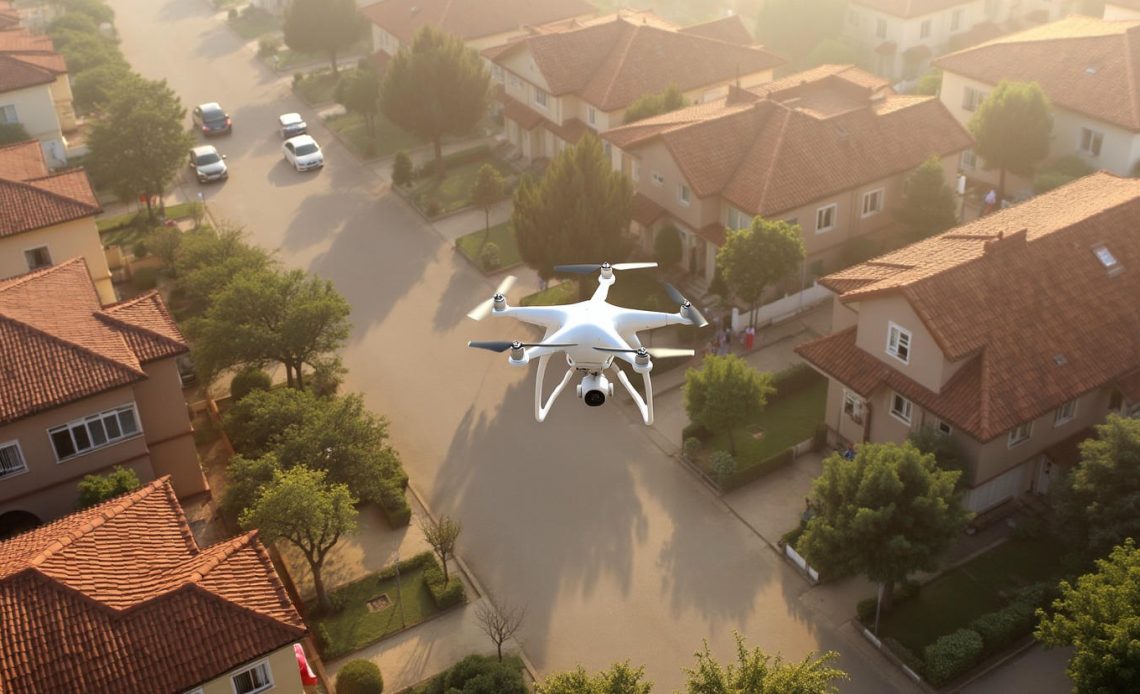
Evaluating Sonoran Desert Institute cost is often part of the decision-making process for students exploring careers in drone logistics, urban aviation, and smart city operations. As drone delivery becomes more visible in urban environments, public acceptance increasingly depends on how openly those operations are managed and communicated, rather than on technical performance alone. Sonoran Desert Institute (SDI), accredited by the Distance Education Accrediting Commission (DEAC), recognizes this shift as municipalities integrate drone flights into public dashboards and noise reporting tools. These systems make low-altitude activity visible and understandable, placing transparency and accountability alongside safety and reliability as core requirements for scalable operations.
As drone activity becomes more visible in cities, public acceptance depends on transparency as much as technical performance. Dashboards and noise reporting tools bring low-altitude operations into the same accountability frameworks used for other civic infrastructure.
Why Transparency Shapes Acceptance
Residents evaluate drone operations through daily experience rather than technical assurances or policy statements. Noise levels, flight frequency, and predictability shape perception more directly than claims about safety or efficiency, and tolerance declines quickly when activity feels unexpected or unexplained.
Transparency reduces this friction by making operations legible. When cities clearly communicate flight purpose, timing, and routing through public tools, uncertainty drops, and complaint volume declines. Visible explanations allow residents to understand what is happening overhead and why, which builds trust and supports acceptance as low-altitude activity becomes routine.
Public Dashboards Make Airspace Visible
Smart city dashboards display drone activity alongside traffic, transit, and environmental data. Interactive maps show routes, altitude bands, and service windows. The visibility reframes drone flights as scheduled infrastructure. Context reduces uncertainty and prevents misinformation from filling gaps.
By integrating drone operations into familiar municipal interfaces, these dashboards support clearer communication with the public and city stakeholders. Residents, planners, and emergency services can see when and why aircraft are operating, which normalizes presence and reduces speculation. Transparent, contextual information helps build confidence that drone activity is planned, monitored, and aligned with broader urban systems.
Integrating Drone Data with City Platforms
Cities integrate drone data into existing civic platforms rather than building separate tools. This keeps oversight consistent across services. Shared standards enable drone information to coexist with other municipal metrics, thereby reinforcing its legitimacy.
This integrated approach simplifies adoption and long-term maintenance for city agencies. By leveraging familiar systems and workflows, staff manage drone activity without specialized training or parallel processes. Consistent interfaces reduce friction, support accountability, and place uncrewed operations under the same governance standards applied to other public services.
Noise Reporting Tools Address Community Concerns
Noise remains a primary concern for residents. Cities pair dashboards with reporting tools that allow users to log disturbances. The operators adjust routing or altitude when patterns appear. Feedback systems enable measured response rather than reactive conflict.
This feedback loop helps refine operating standards that balance service needs with the quality of life in the neighborhood. Aggregated reports reveal trends that inform quieter routes, optimized schedules, and improved vehicle design. By consistently responding to documented concerns, cities and operators demonstrate accountability and reinforce public confidence in the managed integration of drones.
Acoustic Data and Transparency Inform Oversight
Cities analyze acoustic data to understand how flight profiles affect neighborhoods over time. Metrics focus on frequency, duration, and repetition rather than isolated noise events. This evidence-based analysis supports quieter routing strategies, informs operating limits, and helps planners manage coexistence in dense areas where tolerance depends on predictability.
Public dashboards extend this transparency into regulatory oversight. Inspectors and city officials review the same operational data available to residents, reinforcing accountability through shared visibility. Consistent records demonstrate adherence to approved corridors and operating conditions, allowing oversight to function continuously rather than only after complaints or incidents arise.
Visibility, Accuracy, and Feedback Sustain Trust
Public dashboards make routing discipline visible. Approved routes and schedules appear clearly, and deviations stand out quickly, allowing residents and city planners to see whether operations follow established rules. Predictable patterns reinforce credibility, while consistency over time reassures communities that low-altitude activity is planned rather than improvised. This visibility turns routing compliance into a public signal of operational discipline rather than a behind-the-scenes requirement.
Accuracy and responsiveness sustain that trust. Public-facing systems depend on reliable data, supported by validation and auditing processes that preserve integrity across shared platforms. When residents submit noise reports, systems log time, location, and conditions, allowing patterns to inform operational adjustments. Clear interpretation of this data supports oversight, complaint review, and coordination across departments, while demonstrated responsiveness strengthens confidence that concerns are addressed rather than ignored.
Transparency Tools Shape Operational Readiness
As transparency tools become standard in smart city deployments, readiness for drone operations increasingly reflects civic accountability and operational coordination. Dashboards and reporting systems place aviation activity inside public data frameworks, where accuracy, consistency, and responsiveness influence whether services can operate predictably and scale over time. These tools shape how operations are monitored, adjusted, and accepted in environments where public visibility is unavoidable.
Sonoran Desert Institute’s cost reflects the breadth of training associated with data transparency, reporting requirements, and coordination in smart city aviation operations. In cities where dashboards and noise tools shape acceptance, training that emphasizes analytics, coordination, and data accuracy reflects the realities of daily operations rather than isolated flight activity.
Transparency as Operational Infrastructure
Drone delivery scales only when communities understand how and why aircraft operate overhead. Transparency shifts oversight from a reactive process into an ongoing form of coordination, where visibility supports predictability rather than conflict. Public dashboards and reporting tools allow low-altitude activity to be seen as managed infrastructure instead of unexplained disruption, which stabilizes acceptance as flight volumes increase.
Smart cities integrate drone operations into existing civic systems, making transparency a functional requirement rather than a courtesy. Dashboards, noise tools, and shared data platforms place aviation activity within the same frameworks used for transportation, utilities, and other public services. As delivery becomes routine, success depends less on aircraft capability and more on how clearly operations are communicated, monitored, and adjusted. In this model, transparency functions as quiet but essential infrastructure, allowing innovation to expand while remaining compatible with daily urban life.